Mini Split vs Central Air: A Comprehensive Comparison
As mini split vs central air takes center stage, this opening passage beckons readers into a world crafted with good knowledge, ensuring a reading experience that is both absorbing and distinctly original.
Mini split systems offer a unique cooling solution, while central air systems provide a traditional approach. Let’s delve into the differences to help you make an informed decision for your cooling needs.
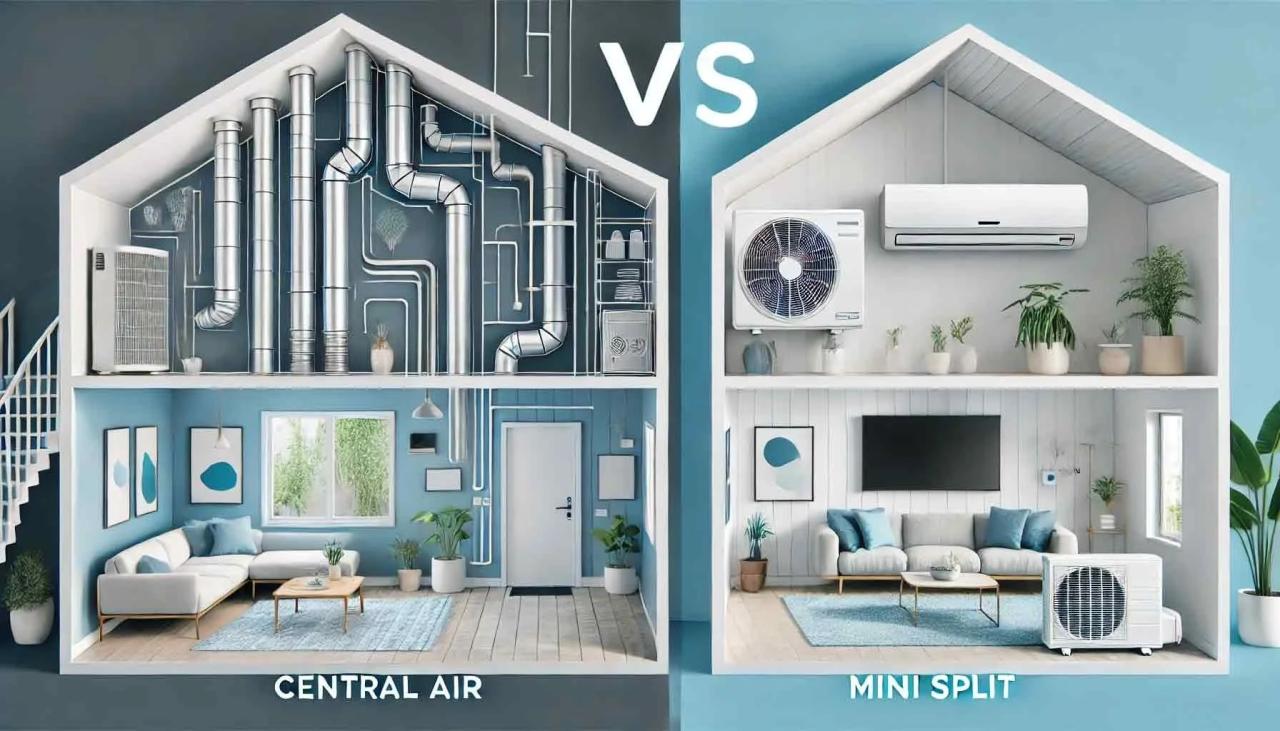
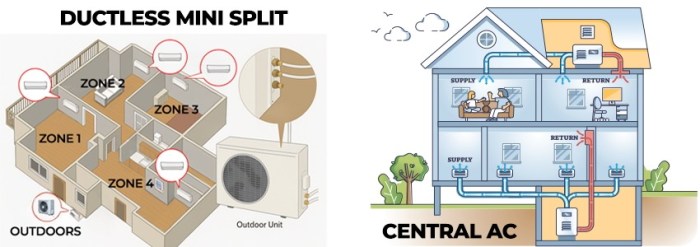
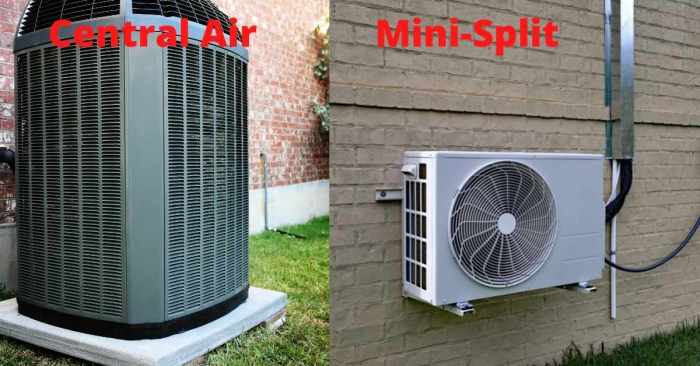
Mini split systems, also known as ductless mini split systems, are heating and cooling units that consist of an outdoor compressor/condenser unit and one or more indoor air-handling units. These units are connected by refrigerant lines and require no ductwork, making them a popular choice for spaces where traditional ducted systems are not feasible.
Mini split systems are easier to install compared to central air systems because they do not require ductwork. The indoor units can be mounted on walls or ceilings, and the refrigerant lines can be easily run through small holes in the walls.
This simplifies the installation process and reduces the time and cost involved.
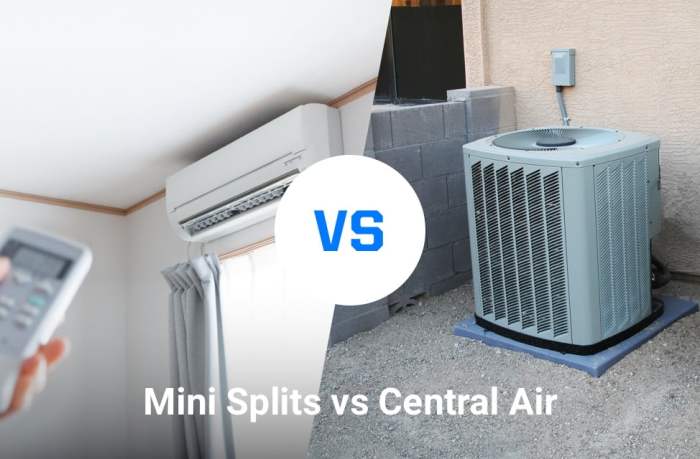
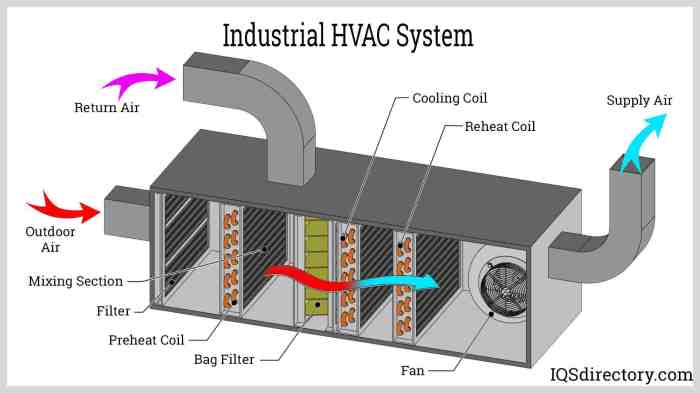
Central air systems work by distributing cooled or heated air throughout an entire building via a system of ducts and vents. A central unit, typically located outside the building, cools the air and then pushes it through the ductwork to various rooms.
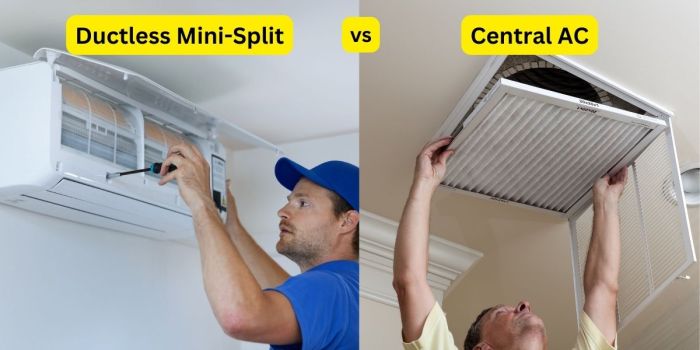
Proper maintenance is crucial for the efficient operation of central air systems. Regularly changing air filters, cleaning ducts, and scheduling professional inspections can help prevent breakdowns and ensure optimal performance.
Central air systems are generally less energy efficient than mini split systems. This is because central air systems cool or heat the entire building at once, regardless of whether all rooms are occupied. This can lead to energy wastage, especially in larger buildings or homes with multiple zones.
When it comes to cost considerations, it’s important to look at both the initial investment and the long-term implications of your decision. Let’s break down the costs associated with mini split systems and central air systems to determine which option is more cost-effective in the long run.
Mini split systems are typically more expensive to install compared to central air systems. The upfront cost includes purchasing the unit itself, as well as the installation costs. However, since mini split systems are ductless, there is no need for expensive ductwork installation, which can help offset some of the initial costs.
Central air systems may have lower initial costs compared to mini split systems, but they can be more expensive to operate in the long run. Central air systems rely on ductwork to distribute air throughout the home, and over time, these ducts can develop leaks or inefficiencies, leading to higher energy bills.
Additionally, central air systems cool or heat the entire home, even if certain rooms are not in use, resulting in wasted energy.
When comparing the overall cost effectiveness of mini split systems versus central air systems, it’s essential to consider both the initial costs and long-term implications. While mini split systems may have higher upfront costs, they are more energy-efficient and offer zone control, allowing you to cool or heat specific areas of your home as needed.
This targeted approach can lead to lower energy bills over time, making mini split systems a more cost-effective option in the long run.
When it comes to the performance and efficiency of cooling systems, factors such as room size, temperature control capabilities, and overall metrics play a crucial role in determining the effectiveness of mini split systems versus central air systems.
Mini split systems are known for their excellent cooling efficiency, especially in smaller to medium-sized rooms. These systems are designed to provide targeted cooling, allowing for precise temperature control in specific areas. As a result, they are often more energy-efficient compared to central air systems, as they only cool the rooms that are in use.
Central air systems, on the other hand, excel in temperature control capabilities across an entire house or building. With the ability to cool multiple rooms simultaneously, central air systems offer a more uniform cooling experience throughout the space. However, this may result in slightly lower efficiency compared to mini split systems due to cooling areas that may not be in use.
When comparing the overall performance metrics of mini split systems and central air systems, it ultimately comes down to the specific needs of the user. While mini split systems are more efficient in smaller spaces and provide targeted cooling, central air systems offer a more comprehensive cooling solution for larger areas.
Factors such as energy efficiency, cost-effectiveness, and ease of installation should be considered when deciding between the two systems.
In conclusion, the choice between mini split and central air systems ultimately depends on your specific needs and preferences. Consider factors like installation costs, energy efficiency, and performance to determine the best option for your home. Whichever you choose, both systems offer effective cooling solutions for a comfortable living environment.
What are the main advantages of mini split systems over central air systems?
Mini split systems offer zone cooling, easier installation, and better energy efficiency compared to central air systems.
What are the maintenance requirements for central air systems?
Central air systems require regular filter changes, coil cleaning, and professional inspections to ensure optimal performance.
How does the initial cost of installing mini split systems compare to central air systems?
Mini split systems generally have higher upfront costs due to individual units for each room, whereas central air systems have lower initial costs for whole-house cooling.
Which system is more energy efficient, mini split or central air?
Mini split systems are typically more energy efficient as they can be turned off in unoccupied rooms, reducing energy waste.
What factors should I consider when deciding between mini split and central air systems?
Consider factors like installation flexibility, upfront costs, energy efficiency, and cooling performance based on your specific needs and home layout.